|
||||||||||||||||
|
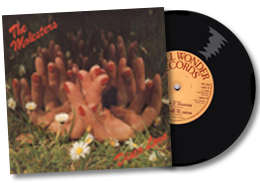
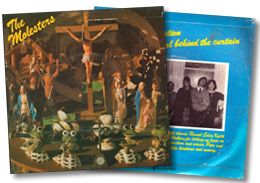
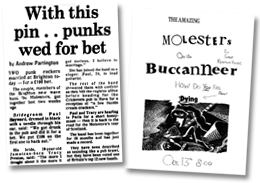
The first and most important line up of course was the one that recorded the two singles for Small Wonder and had the two girls (Tracey and Leoni) in it. Molesters Mk.II: This line up lasted for the second half of 1979 at most. Line up was Paul Haywood guitar, Wayne Calcutt drums, Paul Martin bass, Tom Maltby vocals (ex Wrist Action). We never recorded but undertook a 'worm around the UK' tour. This comprised of pub and college venues in the North of England (between Manchester and Newcastle Upon Tyne). We also played locally of course. I was briefly replaced by another bassist (in late 79, whose name escapes me) and John Ellis returned shortly afterwards to replace Tom Maltby on vocals for a couple of gigs before the group disbanded entirely as far as I know. Mario Panciera -"45 REVOLUTIONS (UK Punk, New Wave and Indie singles In The Years of Anarchy, Chaos and Destruction - 1976/1979)", (March 2006) Not to be confused with the Dutch Punk band of the same name, The Molesters were a six-piece Punk/New Wave combo from the Brighton area formed by Stella Anscombe (v), Leoni Nicol (v), John Ellis (v, NOT the John Ellis of The Vibrators!), Paul Hayward (gtr), Mark Gresty (b) and Wayne Calcutt (d, ex-Cruelty/Poacher) in 1977. Active mainly on the local live circuit, in mid-’78 the group recorded a demo tape which was sent to many labels and to John Peel who invited The Molesters to record a BBC session for his radio show on October 4 (tracks: COMMUTER MAN, DISCO LOVE, END OF CIVILIZATION and GIRL BEHIND THE CURTAIN): a few days later Nicol and Anscombe quit to be replaced by Carole Brooks and Tracy Spencer. After a second Peel session, recorded on January 31, 1979 (tracks: MISS USA, WHAT’S THE TIME, LATEX DARLING and P.M.W./YOUNG AND RICH), the band were finally signed by East London’s premier indie label Small Wonder Records and a single, produced by Bill Sargeant, was issued late in April. Despite its misleading title, the A-side DISCO LOVE is an enjoyable Punk-y song with nice vocal harmonies, while the flip is a solid rock number with a long instrumental intro. Mediocre reviews and unspectacular sales - the awful flower power-flavoured picture sleeve must have been an insurmountable deterrent to anybody remotely into the New Wave - led the combo to change line-up in May. For a few weeks The Molesters performed as a three-piece with Ellis, Gresty and Calcutt, but finally called it a day at the end of June 1979. The Molesters Version 2.0 (June 1978 June 1979) By Mark Gresty One night I saw an advert in a local paper - a new wave band requiring a bassist. I’d just finished my degree and was unsure what to do next. I answered and met the ‘Molesters’. Though I was slightly older than most punks, I was little older than the band. (Like me, they'd been round the block. This was common. Many musicians found punk a haven rather than the exclusion zone it is always painted as. White music had been boring so long that we had unconsciously been waiting for the shot in the arm of punk. It was like the excitement of the mid-60s.) They formed at the beginning of punk and were ambitious. They had three male musicians and three singers, (1 male, 2 female), which distinguished them. Their bassist’s fiancée didn't like him playing - that scene again; I built my 'career' on the cancelled nights out of henpecked bassers - so he left. Unfortunately, they had entered a BBC Radio competition, 'Bands of Hope and Glory', sponsored by Kid Jensen. Just as he left, they reached the final 12 bands. At this point, they needed to do some gigs to be seen by the man from the Beeb. So, they needed a bassist. They wrote their own material, some interesting, some not. I passed the audition - they were impressed - didn’t have long hair, uncool facial hair or other image no-no’s, could play and crucially, had no attachment to hold things up. Wayne, the drummer, was a clown and hypochondriac, worried about the state of his dick which he showed to complete strangers while soliciting advice. Evidently, our female singers were unfazed by this. He was a showman in other ways and liked to grandstand on his drums; in a three-piece band this is not only possible and desirable but practically essential. The sound was full and busy. Every per-formance, even a rehearsal, for Wayne, was a chance to show off. Affable, not particularly bright, he was an emollient who smoothed things if they got sticky. The singer, John, had been around, been in the navy, could look after himself. He had a gruff, none too tuneful, voice - more of a bark really - but he could hold a tune and wrote interesting, slightly pervy lyrics. He was extremely motivated but given to changing his stage name regularly - the one I remember was John Stalin. I suppose it was intended as heavy irony. He bleached, then henna'd, his hair - it looked like a fire blazing on his head. He liked to drink, fuck, take drugs in limitless amounts and was refreshingly free from prejudice on these matters. The guitarist, Paul, I never knew. We had a barely civil working relationship. His disadvantage was an inability to look at a bar sign without getting stupid drunk. This was unlucky in view of our working environment. We even geared the act to this, running songs together in twos and threes to minimise opportunities for on-stage drinking. Off stage, we watched him like a hawk; his girlfriend even tried to keep him sober before a gig. Like many stupid drunks, he didn't accept his shortcoming. His playing was crap when drunk. Even sober, he couldn’t play in any technical sense, but he had a knack of stringing interesting sequences of noise together in ways that could be constructed into songs. The two women, Stella and Leone, I didn't know well. I hardly saw them, except at rehearsals. Stella was a punkette in the Siouxsie mould, Leone, a willowy girl with long, long black hair. They didn't really sing so much as scream responses to John's barks. We got on ok. They seemed to appreciate my working with them to improve their vocals. I suppose the original idea was for them to offer some on-stage sex appeal. I asked if they wanted to be more involved in the music. When they said yes, we started working on making their vocals more musical without compromising the sound. But they didn’t stay long and, soon after I joined, were replaced by another pair, both called Carole, one of whom worked in the first Body Shop. Later, she was replaced by another girl who called herself Tracy Spenser after clue: turn the names around. She later married Paul. As soon as I was accepted by the band, we had intense discussions about policy. The pressing need was for us to rehearse the material and put an act together. Then John and Paul were writing new stuff which needed rehearsing. In the pub after rehearsals I got talking to John. (Paul had his own friends, Wayne was a mother's boy who liked his creature comforts.) I had been spending time in the pubs around town but I had never seen them or heard their name much. (What I had heard was that they had a reputation for offence and sexism - my friends couldn’t believe I had joined them.) I was confused - my impression was of them as a big band locally. John said they hadn’t played much locally since they were waiting for a break to play in London. I thought this was crazy and said so. They had no local following and were expecting to show themselves to best advantage in front of an indifferent audience for a BBC producer some time. I thought we should get out, play as much as possible to build a following, prepare for bigger gigs in London and test our material in front of audiences. John agreed when I put it in this light and from then on we spent a lot of time together drinking and speeding or smoking dope but always talking about music and the band. John was the only one who really cared about music and had firm opinions. We turned each other on to different things. We started actively looking for gigs and booking nights at the Alhambra. We got a month of dead Monday nights and turned them into benefits for various organ-izations. We supported an NUJ strike, played to support Gay Pride - satisfying a personal ambition to be identified with a gay event and make connections in the gay community - plus a few other things. These helped to get our name about and change our reputation. We started to build a following. Soon we were the second biggest band in the area, packing out venues. We had an exciting stage show it was all action, fast moving and non-stop. We fine tuned tempi and set list, run-ning songs together so it was professional. We rehearsed every night at least an hour or two. It got so tight that we could not make a mistake. We no longer had to think about things and could enjoy what we were doing. The songs were fast, sometimes quite complex, with time signature changes to be negotiated at un-forgiving tempi. These gigs meant getting up at the crack of dawn armed with 50 or 60 A4 posters and buckets of wall-paper paste and fly-posting every available surface in town especially those that said ‘no posters’. We often got chased by police. We also had irate shopowners at our gigs with policemen in tow. There was no time to work and play in the band so I left my job. The lifestyle we led was decadent but I guess typical of a band living together. There were loads of drugs around and people seemed happy to give them to us. I lived on ampheta-mine, dope and amyl nitrate, occasionally cocaine and morphine. One late morning after playing in London, I woke to find two young dykes curled up at the end of my bed and a drug dealer opening his briefcase, laying out his wares, somewhere in the middle. That was a bit novel. When Paul and Tracy married newspaper headline ‘Punks marry. “With this safety pin, I thee wed”!’ everyone got drunk in the van coming back to the house and on arrival, a bevy of drunk, naked women fell out of the back and scuttled around the streets in broad daylight. John and I had to catch them and cover them up. What happened after we got them into the house I don’t know. But there was lots of noise for quite some time. I was now a fulltime musician also a fulltime pauper, signing on. I also began to write songs in this period. John had some new lyrics, actually two sets, we had been putting one of them to some riffs that Paul had come up with. Not wanting to put noses out of joint by taking too proactive an approach at an early stage, I took a few peeks at the other set of lyrics and, working with John in downtime, wrote some music reminiscent of 'Friday On My Mind', an old 'Easybeats' tune from the 60s. It had stops and starts and a slightly unusual structure where the second and third choruses were longer than the first - 'The End of Civilisation'. Emboldened by this success, which took us no time to write and which we took to the band the next night, I wrote another called 'Young And Rich'- actually a re-sentful dig at Paul, who flaunted his wealth whilst the rest of us were poor. This also had a jerky stop/start structure but a more difficult series of alternating music and singing phrases. I took it to John who, naturally, changed the lyrics but left it otherwise as it was. That became my second ever complete song. As a bonus, I got to sing harmonies on the bridge with John, two male voices being a change from his solo or with the girls’. At this time, John had a girl-friend who became a standing joke in the band. She was American - we christened her Miss USA. He and I were chatting one night saying that what we needed was an ultra-catchy song as a hit single or for audiences to latch on to. It happened that we loved the Ramones. We got the idea of writing a song aux Ramones which could be our ‘hit single’. I suggested ‘Miss USA’ as a title and 20 minutes later we had a song. Hard, rocking and in the Ramones vein, all down-strokes on the guitar, reminiscent of old rockers like ‘I Saw Her Standing There’ , with some authentic ‘beat club’ flourishes, it had call and response vocals, moronically catchy chorus and 5 step chromatic movement to the modulation, we thought it was perfect. I had always fancied being able to write songs to order and here we were doing it. I was thrilled. The last song I wrote for ‘Molesters’ was ‘Modern Homes (And Happy Families)’ - arising from disenchantment and extremely sarcastic. It was a little bland, though in the current vogue of caustic social comment and we only performed it once or twice that I recall. I have a memory of doing it one night at the Richmond. My other musical input to the band was to suggest arrange-ments and structures for Paul’s songs and suggest the title PMW for our short opening instrumental. I forget the other songs we did except ‘Latex Darling’. The BBC competition required us to perform for a producer who tried to solicit sexual favours from various band members not me, I regret to say. Not that I would have accepted but it would have been nice to be considered casting couch fodder. We passed that test the playing one - and were invited to record a live session for the BBC Kid Jensen programme. Soon after this, we had the unsur-passable thrill of hearing ourselves playing on the radio for the first time. We duly notified friends to warn them to listen. Suddenly we were personalities, in the paper etc. People talked to us on the streets and shouted passing 'hellos'. On the strength of this we began to get gigs in London. We had already started doing bigger gigs locally, at Sussex Uni, supporting the Damned - and others. We played at the Marquee supporting the Tourists, then flavour of the month (later, the Eurhythmics.) On the strength of this we were asked to record a session for John Peel. Our hero! The Tourists were quite unpleasant, specially Annie Lennox, livid about the female competition,. They made everything as difficult as poss-ible, wouldn’t let us use the PA, denied us changing room facilities, asked for a fortune for the use of the sound system - we were getting about £25 for the gig; they wanted us to pay £40 for our share of the sound system! We managed not to get ripped off though we didn’t get to use the dressing room. In the end, the singers inadvertently got revenge when they upstaged her. A boob accident-ally flopped out of the leather/suede confections they used to wear. We pre-empted Janet Jackson with ‘wardrobe malfunctions’. The producer of the Peel show, there to see the Tourists, gave us their planned slot on the show and we had instant credibility. We got gigs at the Nashville on the strength of this and when we arrived, our name had been spray painted in metre-high letters on the wall outside. WooHoo! Someone loves us! London gigs became quite commonplace; we played the Marquee again - this time with the Cure, whose manager was interested in us, the Nashville Rooms again, the Moonlight Club - where, on one occasion, our BBC producer told us that two Sex Pistols had come to see us. Less impressively, but totally in character, they were passed out on the floor when we were taken to be introduced to them. So I met them, they almost met me. Most of these famous gigs were basically toilets, in appalling condition, dirty, run down, squalid. We didn’t care; we lived squalid but were dreaming of better. The loos at the Moonlight Club were two or three inches deep in water before the punters came - we were told to change in them! You invest such places with your own sense of magic. We were younger and just happy for the chance to set out our stall before the capital's youth and media. Our John Peel sessions brought in some money (about £250 each) which helped keep us afloat. We were on a tight budget. London gigs never broke even and were more expensive than gigs elsewhere. There was no money in it for anyone. All I ever got £25 - writing credits for single 'The End of Civilisation'; enough to buy a pair of Doc Marten's. We got kudos for the sessions and experience in using studios. Each session raised our profile slightly - I stress the slightness of the raise. He said nice things about us and we were his flavour of the month for a while. We did two sessions, both repeated twice. As a result of the Peel sessions, Pete and Marie who ran an East End punk/new wave record shop and associated record label, Small Wonder, asked if we'd like to record for them. No-one else was beating a path to our door so we graciously accepted. We recorded the same songs as the first Peel session in a small cheap studio in North London. 'Funky' would probably be a kind adjective. They were smoother but they are still abrasive sounding with primitive production values. It was fun. For the break in 'Disco Love' we all pretended to be at a disco and chatted, shouted or whistled. Others were ‘Commuter Man’ and ‘Girl Behind The Curtain’. I hoped we would be asked to do ‘Miss USA’ or ‘Young and Rich’, as we had in the second Peel session, but it didn’t happen, so our hit single never was. On Small Wonder Records, we joined a small and miscellaneous crew of stable-mates. 'Nicky & the Dots' were local peers - proto-Talking Heads really, Patrick Fitzgerald was a so-called 'punk poet'. There were also some arty types, then, there were the Angelic Upstarts, punk skins of dubious political affiliations - the precursors of the Oi! movement. Pete and Marie were terrorized: I could never understand why they had signed them, unless they had been intimidated into it. As part of this motley crew, we went on tour to promote our first single, ‘Disco Love’/'Commuter Man'. We drove to Birmingham, Liverpool, Manchester, Cambridge, London etc. This experience taught me you have to really like bandmates if you have to spend all day, everyday with them in confined spaces. I didn't. By ‘confined spaces’, I mean the back of a van, a dressing room, bars, and spaces on strange floors. In London we played to our largest ever audience - about 5000 - in the Camden Palace then the Music Machine. It was huge - we seemed lost on the stage. We did lots of running around, mostly to reassure ourselves that the rest of the band was still there. We got reviewed in NME then our bible. We were described by Paul Morley as ‘crunchy’ though I never knew what it meant. In Yorkshire, in Colne, we played a gig in a pub in the same street where the Hovis ads were filmed. It was unmistakable. In Liverpool, we played in Eric’s. The last gig we did was in Cambridge. One of the nice things about this was that friends in the Soft Boys, who lived there, came to see us. It was great - though we didn’t know it was the last at the time. I don’t know why we split up. Looking back, it seemed a stupid time to quit but I wasn’t sorry. To have gone on would have meant spending much more time in proximity to these people I had nothing in common with. Music was changing too it couldn’t sustain the level of musical anger or remain unengaged for much longer. It had to start saying what it was and what it wanted. The new wave was starting to absorb the influence of elec-tronic music. Bowie had made ‘Low’, Gary Numan was becoming popular. The brief day of thin white boys in skinny ties came. Maybe that was the reason. Maybe I upset the balance in the band. I think it was Paul’s decision. John and Carole, the other Carole, wanted to form a band. I didn’t know what to do but he asked me to join them and I agreed. The second single came out after we had split up. The Molesters August-October 1979 by Paul Martin Towards the end of our time in Siren, both Charlie McLenehan and I had wanted to find a more developed vehicle as our musical outlet. We went to visit Paul Hayward, the Molesters guitarist at his famous Sillwood Terrace band house (he owned or leased a large building that he sub-let rooms to musicians), having advertised for musicians to reform the Molesters who had just split up in their classic Small Wonder singles line up. The idea was that Charlie and I would become the new rhythm section along with Wayne Calcott, the former line up’s drummer.. In the end, Paul decided he wanted to remain the sole guitarist, but asked if I wanted to be the bassist in the new line up. I took this on and Charlie formed The Relatives with Mark Gresty, formally of the Molesters! Paul Hayward also recruited former Wrist Action lead vocalist, Tom Maltby to be the new Molesters lead vocalist. We spent some time rehearsing both old Molesters songs and some new ones that Paul Hayward had written during August. The idea was always to play out and about as much as possible. The classic Molesters line up had played plenty in Brighton, but aimed quite fairly at getting support slots in London (I remember seeing them play on the same bill as Crass in fact at the Lyceum I think). They had a reputation of not really being part of the Brighton band scene because of this and because they had managed to put out two good 45s on the east London based Small Wonder label which rather set them apart in some people’s perceptions. So it was as a means of reinvention that this new line up of the Molesters set out, this time minus the two girl singers that had been one of their main attractions. The first thing Paul wanted to do was arrange as many gigs as possible in a kind of mini-tour of the country, with a couple of initial warm up gigs locally. Our first gig together was in the evening of Punky Pete’s punk wedding at the Resources Centre. We had been in the countryside all day gathering and consuming magic mushrooms (they taste pretty foul actually in the raw). And as we got to the Resources Centre, the chemical effect kicked in. Certainly it was a weird experience looking at the aftermath of a wedding reception that included the local punk who’s who (I remember Helen McCookery book distinctly), when we had not been part of that with these magic mushrooms inside of us, talk about being on the outside looking in, weird indeed! We did a fair gig though and went down well that night. I do remember Patrick Fitzgerald asking me why I was wearing a Sid Vicious T Shirt and saying something to the effect of ‘he was no hero’. I simply said it was made locally and I was supporting a local enterprise. Arranging the ‘tour’ entailed sitting by the telephone with a copy of the Melody Maker ringing up hotels, pubs and clubs to see if we could get a spot. Paul did most of this, though I rang one or two and we ended up with a five date ‘tour’ reaching from Accrington in South Lancs up to Newcastle on Tyne. We recruited Simon Watson, who had been a roadie for The Plastix, (and later became manager of Midnight and The Lemon Boys) to drive us and our gear in a rented van and also act as a roadie. This jolly jape lasted a week, though of course, in terms of memory it seems to have been a lot longer. It was a good laugh. We lived on mars bars and motorway services food (I actually lost weight in a week on a diet of mars bars, egg and chips etc!). I do recall arriving at a farm house where we were being put up overnight in a place called Barnaldswick, before we played the two gigs in neighbouring Colne. Both Simon and I were allotted the attic to kip down in our sleeping bags. Apparently the UK Subs had been staying there a few days before and the place was littered with girls knickers and stockings etc!! Simon and I played Submarine commanders as we attempted to navigate the angular roofing structure right above our heads as we got into our sleeping bags; ‘Going down now No.1, I might be some time’, ‘roger that No.2’ came the reply in the dark. The night we arrived there, we were all starving hungry but of course no shops were open and it was in the middle of nowhere. There were I think maybe two or three very small potatoes that we found and spent an hour or so waiting for them to bake in an oven so we could get half a mouthful each. I still remember descending on a local café the next morning with everyone piling out of the van and ordering huge fry up breakfasts of egg and chips and tea etc. and the young waitresses laughing at our southern / London like accents; ‘you’re not from round here then’ they said and of course we had a great laugh with them. Difficult to imagine that being a point of conversation any more seeing how much the world has shrunk these days. At the Union Hotel, I think all of us were allocated one room and a double bed so most of us were on the floor for the night. At Newcastle Balambras, we were informed it was almost the only place for local bands to play hence the three support bands. (on a revolving stage!). They were hard to please up there, as northern crowds are reputed to always be, but we enjoyed it well enough. We met quite a few people along the way and some very nice girls in particular in Colne! On our return we did two local gigs, one at the Buccaneer (where the only photos of us were taken) and another at the Resources Centre again. Thereafter, we split. I think Paul perhaps thought Tommy and I were not as serious as he was organisationally. I left and Paul brought in a French guy called Francois on bass, who was renting one of his rooms in the band house. They played one remaining gig commitment in Salisbury I think. Then they had a gig at the Buccaneer which I went along to see. Tommy did the sound check, but John Ellis, the former lead singer in the Molesters, was also in the crowd and called from the floor something like, ‘what’s happening with this gig Paul, am I doing it or not?’. He did do the gig and Tommy got off with Stella, one of the previous girl singers from the Molesters and danced to the music with her rather than singing it that night! In any event I think that was pretty much it. They had altered some of the songs so there was more syncopation to them which I didn’t like much, but I thought it was an interesting change at least. I don’t think they lasted long after that though. I would shortly afterwards reunite with Charlie as the Relatives came to an end and form Life Size Models. The Molesters Line up 1979 Tom Maltby lead vocals Gigs played in this line up Resources Centre 15/9/1979. This was in the evening after Punky Pete’s wedding reception! Support acts Chefs, Smeggy & The Cheesy Bits, Patrick Fitzgerald Set List Too Many Strangers |
||||||||||||||||
|
Home | Whats New | Punk Bands | The Vault | Attrix Records | Archives | Stuart Jones | PunkBrighton | Best emails | Feedback
|
||||||||||||||||